New and changed files
Unchanged content isn't reprocessed; transfer and workload focus on real changes.
Kladim's folder engine scans the source, compares it with the previous state, and processes only new or changed files. Deleted files can move to a trash area, old versions to version history, and unusual bulk changes can be flagged for review.
 Folder yedekleme
DeltaSense™ change detection
Folder yedekleme
DeltaSense™ change detection
 KLD2 protectionFile versions → KLD2✓
Kladim uses file size, modification time and previous-state information to identify the files that need processing. This way, corporate documents, projects and working files are managed with version awareness.
Unchanged content isn't reprocessed; transfer and workload focus on real changes.
Deleted files can move to the server-side trash flow; the previous state of a changed file can move to the versioning area.
Unusual patterns like a large number of deletions or changes can be placed in a safe hold-and-review flow.
Each stage becomes a backup experience that tells you what it's doing and keeps the result visible.
Select the root directory to protect from Kladim's fast file explorer.
New, changed, deleted and versioned files are compared against the previous state.
Changed content is encrypted; unnecessary re-upload is reduced.
Versions, the trash area and safe target verification support the restore decision.
A file explorer that preserves the real folder structure presents file history, different versions and restore options in a familiar layout.
Try this flow in the demo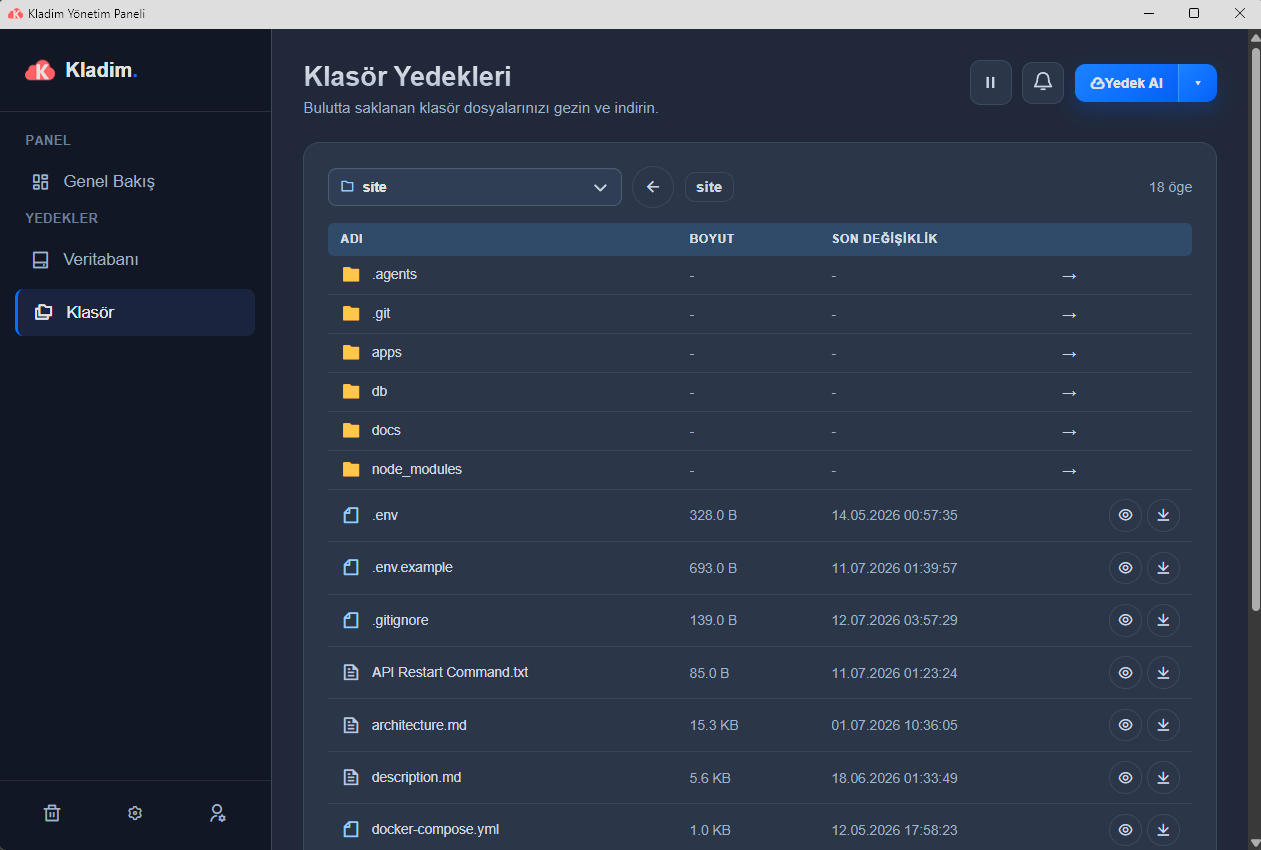
As a result of the scan, only files that need processing are queued for encryption and upload.
Unusual bulk deletion and modification patterns can trigger a review flow that helps preserve healthy versions.
Target path checks help prevent writing to dangerous locations; the restore proceeds in a more controlled way.
We explain the technical details without hiding them behind marketing language, in the way Kladim actually works.
Hayır. Folder motoru önceki durumla karşılaştırma yaparak yeni veya değişen dosyaları belirler ve işlem yükünü gerçek değişikliklere odaklar.
The previous states of changed files can be kept in the versioning flow, and points from different dates can be viewed in the file history.
Deleted files can move to the server-side trash flow; this adds an extra layer of safety between an accidental deletion and permanent loss.
Kladim has an awareness layer that evaluates unusual patterns like a large number of files being deleted or changed at once. Suspicious operations can be placed in a review flow.
Explore how Kladim protects other data sources in their own technical context.
Turkey's homegrown digital fortressTry the real interface first, then choose the Kladim plan that fits your needs.


